What is the electrical current requirement for underwater spot lights?
Leave a message

Underwater spot lights are a captivating addition to any pool or water feature, offering both aesthetic appeal and practical illumination. As a leading supplier of underwater spot lights, we often receive inquiries about the electrical current requirements for these fixtures. Understanding these requirements is crucial for ensuring safe and efficient operation, as well as compliance with relevant electrical codes and standards. In this blog post, we'll delve into the key factors that determine the electrical current needs of underwater spot lights and provide valuable insights for pool owners, contractors, and designers.
Understanding Electrical Current Basics
Before we explore the specific requirements for underwater spot lights, let's briefly review some fundamental concepts of electrical current. Electrical current, measured in amperes (A), is the flow of electric charge through a conductor. In the context of underwater spot lights, the current requirement refers to the amount of electrical current needed to power the light fixture effectively.
The relationship between electrical current, voltage, and power is governed by Ohm's Law, which states that current (I) is equal to power (P) divided by voltage (V), or I = P/V. This means that the current requirement of a spot light depends on its power rating and the voltage of the electrical supply. For example, a 100-watt spot light operating at 12 volts would require a current of approximately 8.33 amperes (100W / 12V = 8.33A).
Factors Affecting Electrical Current Requirements
Several factors influence the electrical current requirements of underwater spot lights. These include:
1. Power Rating
The power rating of a spot light, measured in watts (W), is a key determinant of its current requirement. Higher-wattage lights generally require more current to operate. For instance, a 200-watt spot light will draw more current than a 100-watt light when connected to the same voltage source.
2. Voltage
The voltage of the electrical supply also plays a crucial role in determining the current requirement. Most underwater spot lights are designed to operate at low voltages, typically 12 volts or 24 volts, for safety reasons. Lower-voltage lights require less current compared to higher-voltage lights with the same power rating. For example, a 100-watt spot light operating at 24 volts would draw approximately 4.17 amperes (100W / 24V = 4.17A), which is half the current required by a 100-watt light operating at 12 volts.
3. Lighting Technology
The type of lighting technology used in the spot light can also affect its current requirement. Traditional incandescent bulbs tend to consume more power and draw more current compared to energy-efficient alternatives such as LED lights. LED spot lights are known for their low power consumption and high luminous efficacy, making them a popular choice for underwater applications. For example, an LED spot light with a power rating of 20 watts may provide the same level of illumination as a 100-watt incandescent bulb, but it will draw significantly less current.
4. Number of Lights
If you plan to install multiple underwater spot lights in your pool or water feature, the total current requirement will increase accordingly. It's important to calculate the combined current draw of all the lights to ensure that your electrical system can handle the load. You may need to install a dedicated circuit or upgrade your electrical panel to accommodate the additional demand.
Safety Considerations
When dealing with electrical systems in and around water, safety is of utmost importance. Underwater spot lights must be installed and maintained in accordance with local electrical codes and standards to prevent electrical shock and other hazards. Here are some key safety considerations:
1. Ground Fault Circuit Interrupters (GFCIs)
All electrical circuits supplying underwater spot lights should be protected by GFCIs. A GFCI is a device that monitors the flow of electrical current and automatically shuts off the power if it detects an imbalance, such as a leak of current to the ground. This helps to prevent electrical shock in the event of a fault.
2. Waterproof Enclosures
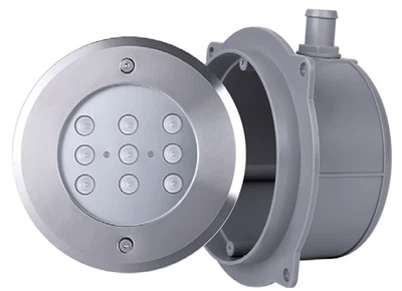
Underwater spot lights must be housed in waterproof enclosures to protect them from water damage and ensure safe operation. The enclosures should be rated for underwater use and provide a secure seal to prevent water ingress.
3. Proper Wiring and Installation
The wiring for underwater spot lights should be properly sized and installed in accordance with electrical codes. It's important to use approved wiring materials and connectors that are suitable for wet environments. The lights should be installed at the correct depth and distance from the water surface to ensure optimal performance and safety.


Calculating Electrical Current Requirements
To calculate the electrical current requirement for your underwater spot lights, you'll need to know the power rating of each light and the voltage of the electrical supply. Here's a step-by-step guide:
Step 1: Determine the Power Rating of Each Light
Check the product specifications or label on each spot light to find its power rating in watts. If you have multiple lights, note down the power rating of each one.
Step 2: Identify the Voltage of the Electrical Supply
Most underwater spot lights are designed to operate at 12 volts or 24 volts. Check the electrical supply in your pool area to determine the voltage.
Step 3: Calculate the Current Draw of Each Light
Use Ohm's Law (I = P/V) to calculate the current draw of each light. Divide the power rating of the light by the voltage of the electrical supply to get the current in amperes.
Step 4: Calculate the Total Current Draw
If you have multiple lights, add up the current draw of each light to get the total current requirement. This will help you determine the size of the electrical circuit and the capacity of the GFCI needed to protect the lights.
Complementary Products for Your Pool
In addition to underwater spot lights, we also offer a range of complementary products for your pool, including 2 Hp Sand Filter Water Pump, PC Slates Cover For Pool, and Vinyl Pool Liners. These products are designed to enhance the functionality and aesthetics of your pool, ensuring a clean, safe, and enjoyable swimming experience.
Contact Us for Your Underwater Spot Light Needs
If you're considering installing underwater spot lights in your pool or water feature, we're here to help. Our team of experts can provide you with professional advice on the electrical current requirements, safety considerations, and product selection. We offer a wide range of high-quality underwater spot lights in various styles, colors, and power ratings to suit your specific needs and preferences.
Whether you're a pool owner looking to upgrade your lighting system or a contractor working on a new pool project, we can provide you with the products and support you need. Contact us today to discuss your requirements and get a free quote. Let's work together to create a stunning and safe underwater lighting solution for your pool.
References
- National Electrical Code (NEC)
- Underwriters Laboratories (UL) Standards
- Pool & Spa Association (PSA) Guidelines