Do underwater spot lights need a ballast?
Leave a message

Hey there! As a supplier of underwater spot lights, I often get asked the question: "Do underwater spot lights need a ballast?" Well, let's dive right into it and find out.
First off, let's understand what a ballast is. In simple terms, a ballast is a device that regulates the current and voltage in an electrical circuit. It's like a traffic cop for electricity, making sure everything flows smoothly and safely. When it comes to lighting, ballasts are commonly used with fluorescent and high-intensity discharge (HID) lamps to control the amount of power they receive.
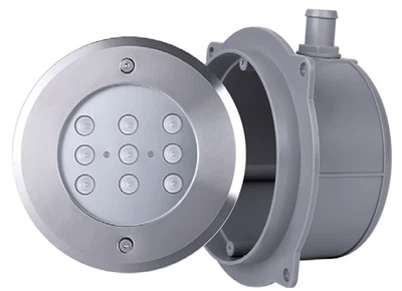
Now, not all underwater spot lights require a ballast. It really depends on the type of light source being used. LED (Light Emitting Diode) underwater spot lights, for example, typically don't need a ballast. LEDs are solid-state lighting devices that operate on low voltage direct current (DC). They are energy-efficient, long-lasting, and can be powered directly from a compatible power supply. This means you can install LED underwater spot lights without the hassle of dealing with a ballast, making them a popular choice for many pool owners and installers.
On the other hand, if you're using traditional lighting technologies like incandescent or halogen bulbs in your underwater spot lights, you might not need a ballast either. These types of bulbs are designed to operate directly on the standard alternating current (AC) power supply available in most homes and buildings. They are relatively simple to install and don't require any additional components to regulate the power.
However, if you're using fluorescent or HID lamps in your underwater spot lights, a ballast is a must. Fluorescent lamps work by passing an electric current through a gas-filled tube, which produces ultraviolet light. This ultraviolet light then strikes a phosphor coating on the inside of the tube, causing it to emit visible light. To start and maintain this process, a ballast is needed to provide the correct voltage and current to the lamp.
HID lamps, such as metal halide and high-pressure sodium lamps, also require a ballast. These lamps produce light by creating an electric arc between two electrodes in a sealed chamber filled with a gas and metal salts. The ballast is responsible for providing the high voltage needed to start the arc and then regulating the current to keep the lamp operating properly.
So, why is a ballast so important for fluorescent and HID lamps? Well, without a ballast, these lamps would draw too much current and overheat, which could lead to premature failure or even a fire hazard. The ballast helps to protect the lamp and ensure its safe and efficient operation.
Another reason to use a ballast is to improve the performance of the lamp. Ballasts can help to reduce flicker, improve color rendering, and increase the overall lifespan of the lamp. This means you'll get better-quality lighting and save money in the long run by not having to replace the lamps as often.
Now that we've covered the basics of whether underwater spot lights need a ballast, let's talk about some of the other factors you should consider when choosing underwater spot lights for your pool or water feature.
One important factor is the brightness and color temperature of the lights. You'll want to choose lights that provide enough illumination to safely navigate your pool at night and create the desired ambiance. The color temperature of the lights can also have a big impact on the overall look and feel of your pool. For example, warm white lights (around 2700K - 3000K) can create a cozy and inviting atmosphere, while cool white lights (around 4000K - 5000K) can give a more modern and energetic look.
Another factor to consider is the durability and waterproof rating of the lights. Since they'll be submerged in water, you'll want to choose lights that are specifically designed for underwater use and have a high waterproof rating. Look for lights that are rated at least IP68, which means they are completely dust-tight and can be submerged in water for extended periods without damage.
You should also think about the installation process and the compatibility of the lights with your existing pool equipment. Some underwater spot lights are designed to be easily installed in existing pool fixtures, while others may require more extensive modifications. Make sure you choose lights that are compatible with your pool's electrical system and that you have the necessary tools and expertise to install them safely.
If you're looking to enhance your pool experience even further, you might want to consider some of the other products we offer, such as the High Pressure Motor Pump for Big Pool, which can provide powerful water circulation and filtration, or the Ozonator For Swimming Pool Treatment, which can help to keep your pool water clean and clear. And if you're into cold therapy, check out our The HLB Cold Tub, which is perfect for post-workout recovery or just relaxing after a long day.
In conclusion, whether underwater spot lights need a ballast depends on the type of light source being used. LED, incandescent, and halogen bulbs usually don't require a ballast, while fluorescent and HID lamps do. By understanding the different types of lighting technologies and their requirements, you can make an informed decision when choosing underwater spot lights for your pool or water feature.


If you have any questions or need more information about our underwater spot lights or any of our other products, don't hesitate to reach out. We're here to help you create the perfect pool environment. Contact us today to start the procurement discussion and find the best solutions for your needs.
References
- Lighting Basics: Understanding Ballasts. Energy.gov.
- LED Lighting Technology. Lighting Research Center, Rensselaer Polytechnic Institute.
- Pool and Spa Lighting Installation Guide. National Electrical Manufacturers Association.