How Do Pool Solar Covers Work? The Complete Guide To Pool Covers
Leave a message
Published by HLB Pools & Spas | Updated: September 2026
If your pool is losing heat faster than it can gain it, a pool cover may be the single most cost-effective upgrade you can make. According to the U.S. Department of Energy, swimming pools lose the majority of their heat through evaporation - and a solar pool cover stops that process at the source.
In this guide, we break down exactly how pool solar covers work, the types available, the real energy savings you can expect, and how to choose the right one for your pool.
Not sure which pool cover fits your pool? Contact the HLB team for a free recommendation →
What Is a Pool Solar Cover?
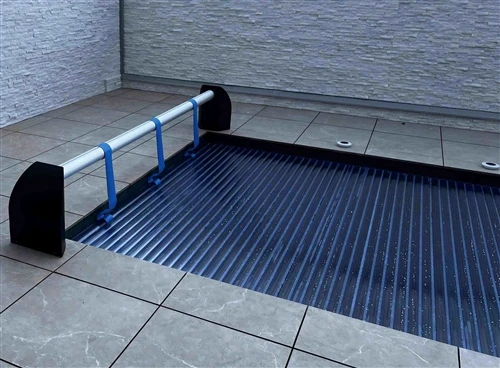
A solar pool cover - also called a solar blanket - is a UV-stabilized sheet of polyethylene or polypropylene featuring a layer of air-filled bubbles on one side. It floats directly on the water's surface, bubble-side down, creating an insulating barrier between your pool and the open air.
Unlike safety covers or winter covers, solar covers are specifically engineered to:
- Absorb solar energy and transfer it to the water
- Trap existing heat overnight and during cooler periods
- Block evaporation, the primary driver of pool heat loss
They are available in thicknesses from 400 to 1,600 microns, with heavier gauges offering better heat retention and longer lifespan.
| Thickness | Best For | Lifespan | Heat Retention |
|---|---|---|---|
| 400 micron | Budget / seasonal use | 2–3 years | Good |
| 500 micron | Residential year-round | 3–5 years | Very Good |
| 800 micron | Commercial pools | 5–7 years | Excellent |
| 1,600 micron | High-UV / hot climates | 7+ years | Excellent |
How Does a Pool Solar Cover Work? (The Science)
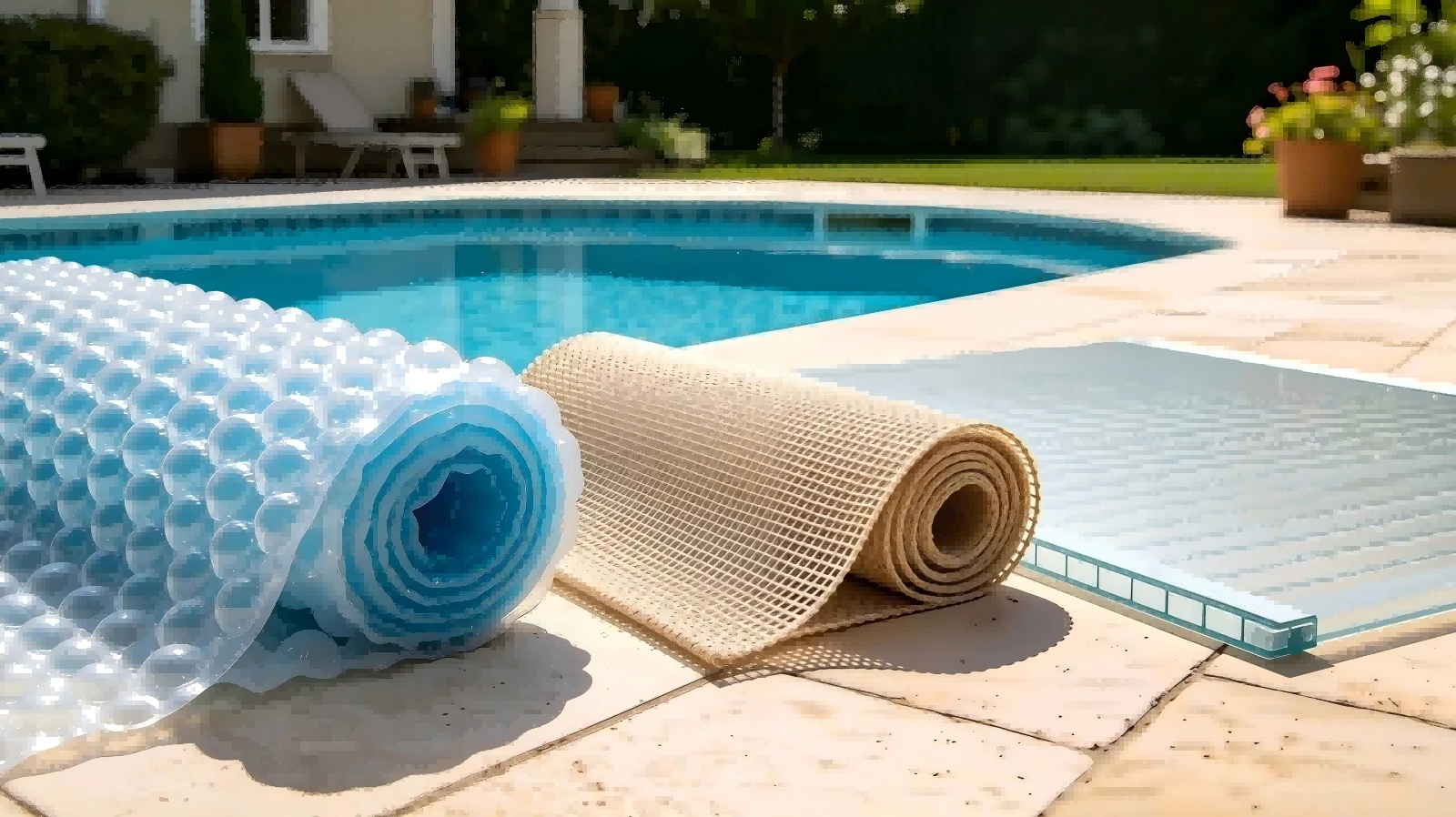
A solar pool cover works through three simultaneous mechanisms:
1. Solar Heat Gain
The transparent or light-blue bubbles act like a greenhouse lens - sunlight passes through the cover and warms the water beneath. On a clear day, a quality solar blanket can raise water temperature by 5–10°F (3–6°C) within 6–12 hours.
2. Evaporation Barrier
Evaporation accounts for up to 70% of pool heat loss (U.S. DOE). The cover sits directly on the water surface, physically blocking moisture from escaping into the air. This single function alone can reduce evaporation by up to 95%.
3. Overnight Heat Retention
Once heat is gained, the bubble layer acts as insulation - the trapped air pockets resist conductive and convective heat loss throughout the night and on overcast days.
| Heat Loss Source | Without Cover | With Solar Cover |
|---|---|---|
| Evaporation | ~70% | Reduced by up to 95% |
| Radiation | ~20% | Reduced by ~50% |
| Convection | ~5% | Reduced by ~60% |
| Conduction | ~5% | Minimal reduction |
Real-world result: Pool owners who consistently use a solar cover report water temperatures averaging 8°F higher than uncovered pools - and annual energy savings of 50–70% on heating costs.
Types of Pool Solar Covers: Which One Is Right for You?
Not all pool covers are the same. Here are the four main types:
1. Solar Blankets (Bubble Covers) The most popular option for residential pools. Affordable, effective, and available in custom sizes. HLB's Bubble Pool Cover is manufactured with UV-stabilized polyethylene for long-lasting performance.
2. Solar Rings Modular disc-shaped covers that interlock over the pool surface. Easier to handle than a full blanket - ideal for irregularly shaped pools.
3. Liquid Solar Covers A chemical film (isopropanol monolayer) applied to the water surface. Invisible and convenient, but significantly less effective than physical covers. Best used as a supplement.
4. Automatic Solar Cover Systems Motorized reel systems that deploy and retract the cover at the touch of a button. Premium cost, but highest convenience and lifespan. HLB's Automatic Pool Cover is built for inground pools with long-term commercial reliability.

| Type | Price Range | Heat Efficiency | Best For |
|---|---|---|---|
| Solar Blanket | $50–$300 | ⭐⭐⭐⭐ | Most residential pools |
| Solar Rings | $80–$400 | ⭐⭐⭐ | Irregular shapes |
| Liquid Cover | $15–$60/yr | ⭐⭐ | Supplemental use |
| Automatic System | $500–$3,000+ | ⭐⭐⭐⭐⭐ | Commercial / premium pools |
Key Benefits of a Pool Solar Cover
Cut Energy Costs by Up to 70%
Heating a pool is expensive. A solar cover reduces heat loss so dramatically that most pool owners see the product pay for itself within a single season. The U.S. Department of Energy classifies pool covers as one of the highest-ROI energy upgrades for residential pools.
Save Water and Chemicals
Less evaporation means:
Less top-up water needed (saves 30–50% on water consumption)
Fewer chemical adjustments - stabilised water chemistry reduces annual chemical spend by an estimated $300–$500
Extend Your Swimming Season
By maintaining higher baseline temperatures, a solar cover can add 4–8 weeks to your swimming season in temperate climates - getting you in the water earlier in spring and later in autumn.
Reduce Debris and Cleaning Time
As a secondary benefit, the cover acts as a physical barrier against leaves, dust, and insects - cutting cleaning time and filter load.
How to Use and Maintain Your Pool Solar Cover

Installation: Place the cover bubble-side down on the water surface. Trim to the shape of your pool using scissors - full coverage is key to maximum performance.
Daily use: Deploy the cover whenever the pool is not in use, especially at night. Remove it before swimming and before adding any chemical treatments.
Reel systems: A manual or automatic reel dramatically simplifies daily use and significantly extends the cover's lifespan by reducing fold-stress on the plastic.
Maintenance schedule:
| Task | Frequency | Notes |
|---|---|---|
| Rinse with garden hose | Monthly | Remove chemical residue |
| Inspect for UV degradation | Monthly | Look for brittleness or fading |
| Clean with mild soap | Every 3 months | Never use bleach |
| Store in shade when unused | Always | UV exposure shortens lifespan |
| Replace | Every 3–5 years | Sooner in high-UV climates |
Pro tip from HLB installers: "Even if a cover looks intact, UV degradation reduces its insulating efficiency invisibly. We recommend replacing standard solar blankets every 3–5 years for peak performance."
Solar Cover vs. Other Pool Cover Types
| Feature | Solar Cover | Safety Cover | Winter Cover | Automatic PC Cover |
|---|---|---|---|---|
| Primary Purpose | Heat retention | Drowning prevention | Off-season protection | Year-round versatility |
| Heat Gain | ✅ High | ❌ None | ❌ None | ✅ High |
| Safety Rating | ❌ | ✅ ASTM F1346 | ⚠️ Partial | ✅ (model-dependent) |
| Cost | $50–$300 | $500–$3,000 | $100–$500 | $500–$5,000+ |
| Lifespan | 3–5 years | 10–15 years | 3–10 years | 10–20 years |
For climates with freezing winters, the best practice is to use a solar cover during the swim season and switch to a solid PVC Safety Pool Cover or Polycarbonate PC Slat Cover in the off-season.
Frequently Asked Questions
Should the bubbles face up or down?
Always bubbles down - toward the water. This positions the insulating air pockets to maximise heat transfer into the pool and minimises heat loss upward.
Can I leave the solar cover on all the time?
Remove it before swimming and before adding chemicals (chlorine, shock, pH adjusters). Trapped gases from chemical reactions can degrade the cover material prematurely.
Do pool solar covers work in winter?
In mild climates, yes - they extend the shoulder season effectively. In freezing temperatures, replace with a dedicated winter or safety cover to prevent ice damage.
How much can a pool cover save annually?
According to the U.S. Department of Energy, pool covers reduce heating costs by 50–70% annually. For a gas-heated pool, this can represent savings of $500–$1,500 per year depending on pool size and local energy rates.
What size solar cover do I need?
Solar covers are typically sold slightly oversized and trimmed to fit. Measure your pool's longest length and widest width, and order the next size up. HLB offers custom-sized pool covers for any pool shape - request a free custom quote here.
Why Choose HLB for Your Pool Cover?
HLB Pools & Spas (Shenzhen Hailanbao Technology Co., Ltd.) is a vertically integrated manufacturer with roots dating back to 1966. With 8 production facilities across China and Malaysia, ISO-certified quality systems, and export to 50+ countries, HLB delivers:
✅ Factory-direct pricing with no middlemen
✅ Custom sizing for any pool shape
✅ Full product range: bubble covers, automatic systems, PVC safety covers, polycarbonate slat covers
✅ Free samples, CAD drawings, and 24-hour response
✅ ISO / RoHS / REACH compliant materials - non-toxic and eco-safe

"We installed HLB automatic pool covers across three of our boutique hotel pools. The result? Lower maintenance hours, significant savings on chemicals and heating, and guests love the clean, modern look." - Laurent D., Hotel Group Facilities Director, France
Ready to Find the Right Pool Cover?
Whether you need a budget-friendly solar blanket for a residential pool or a fully automated commercial system, HLB has a solution built to your specification.
Get Your Free Pool Cover Recommendation →
Or contact us directly:
📧 Email: info@hlbpoolsandspas.com
💬 WhatsApp: +86 15986830353
Article reviewed by the HLB Pools & Spas technical team. All energy savings figures referenced from the U.S. Department of Energy Swimming Pool Heating guide. Last updated: September 2026.