


How Long Does A Pool Liner Last? Lifespan, Warning Signs & 2026 Replacement Costs
Leave a message
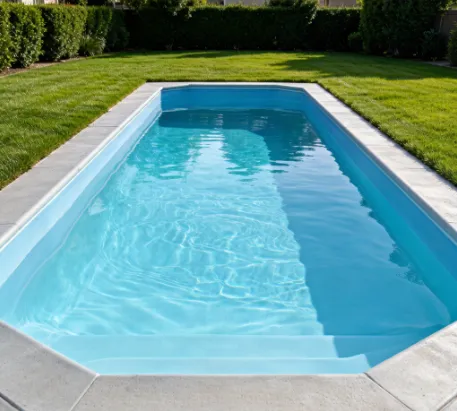
Most inground pool liners last 5 to 9 years. Above-ground liners typically run 6 to 10. Where yours lands in that range depends almost entirely on decisions you're making right now-how you maintain your water, whether you use a cover, and what liner you chose in the first place.
How Long Does a Pool Liner Really Last?
Inground pools:
5–9 years. A liner at the low end usually has at least one of these going against it: inconsistent water chemistry, no pool cover, heavy sun exposure, or a large dog with unrestricted pool access. A liner at the high end typically belongs to someone who tests their water weekly, covers the pool when it's not in use, and chose a thicker liner to begin with.
Above-ground pools:
6–10 years. The lifespan factors are essentially the same, though above-ground liners face more wall friction and are more vulnerable to seasonal folding damage in cold climates.
On warranties:
Most liner warranties are 25–30 years-and almost meaningless in practice. They're heavily prorated, meaning coverage shrinks every year. By year 7, a warranty that sounds comprehensive might cover only 50% of the liner material cost-leaving you responsible for 50% of the liner, plus all labor ($800–$2,500), water refill ($150–$400), and chemicals ($150–$300). Plan your replacement budget around real costs, not warranty promises.
5 Things That Are Shortening Your Liner's Life Right Now
1. UV exposure.
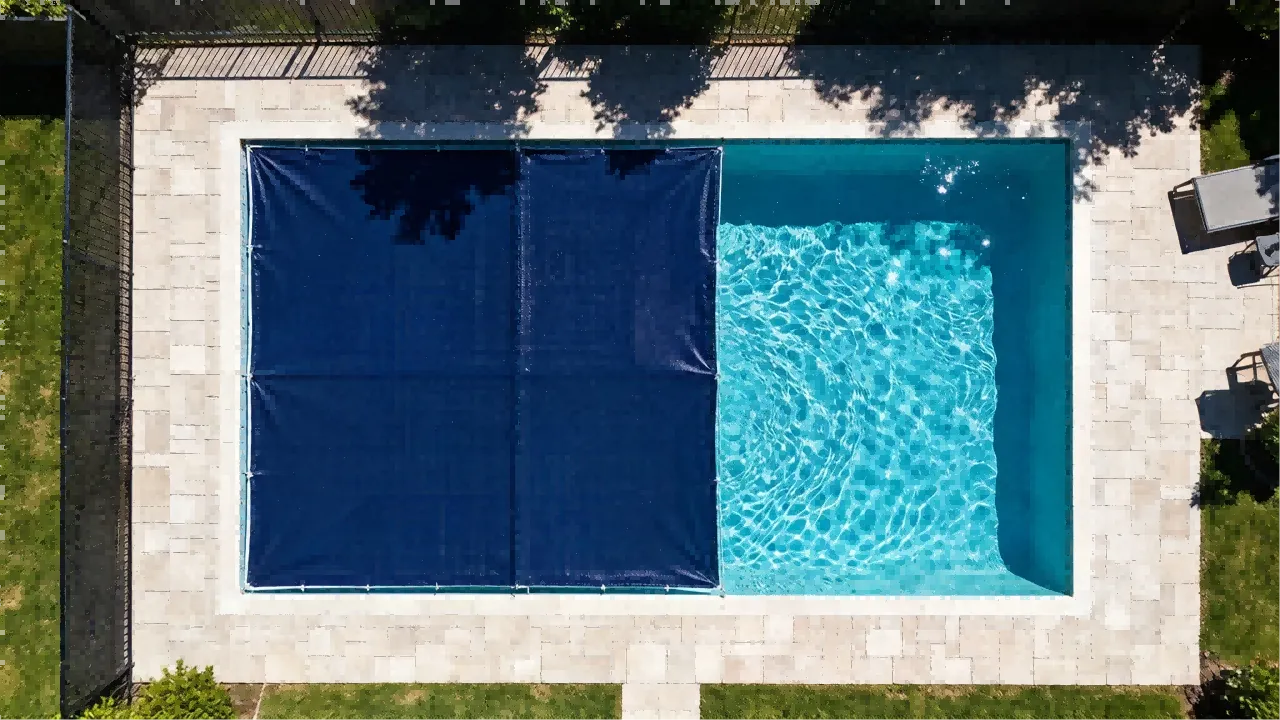
Sunlight degrades PVC over time, making the liner brittle and prone to micro-cracking. Pool owners in Florida or Arizona face substantially greater annual UV exposure than those in northern states-longer seasons, a higher sun angle year-round, and more cloudless days compound significantly over a liner's lifetime. A pool cover used consistently is one of the highest-leverage protections for liner longevity-the difference between a covered and uncovered liner in the same climate can easily account for 2–3 years of usable life.
2. Unbalanced water chemistry.
Low pH (below 7.0) corrodes liner material and strips color. High pH (above 7.8) causes calcium scaling that restricts liner flexibility. High chlorine (above 5 ppm) directly oxidizes the PVC. The liner-safe targets:
|
Parameter |
Target Range |
|
pH |
7.2 – 7.6 |
|
Free Chlorine |
1 – 3 ppm |
|
Total Alkalinity |
80 – 120 ppm |
|
Calcium Hardness |
200 – 400 ppm |
3. Poor installation.
An uneven base-caused by improper vermiculite or grout preparation-creates pressure points against the liner that become thin spots and eventually tears. Overstretching during installation creates locally thin areas that fail first. If your liner developed tears in the same spot repeatedly, base irregularities are often why.
4. Skipping winterization.
Water that freezes beneath the liner expands and tears it from the base. Dropping the water level too low removes the hydrostatic pressure that keeps the liner in shape. Concentrated chemicals sitting against the liner all winter bleach and degrade the material. In cold climates, proper winterization is one of the highest-leverage things you can do for liner longevity.
5. Physical damage.
Dogs are the most common cause of liner punctures
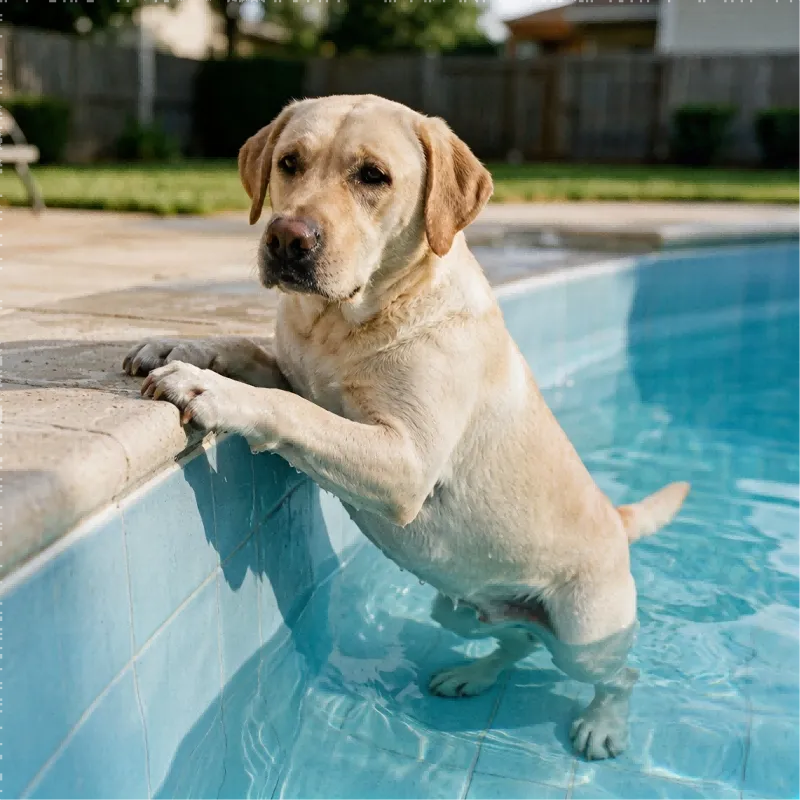
a large dog pushing off the pool floor puts significant concentrated force on the material. Unsupported ladder feet, hard-edged pool toys, and sharp debris on the pool floor are also frequent culprits. A 30 mil liner handles these risks significantly better than a 20 mil liner.
Choosing the Right Liner: Thickness and Type
What "mil" actually means.
One mil equals 1/1000 of an inch. The complication: embossed liners (textured surface) are measured at the peak of the texture, not the overall thickness. A "25 mil embossed" liner may only be 18–20 mils thick in the thinner sections. Non-embossed liners are uniform throughout-the rating reflects actual thickness everywhere. When comparing, ask whether the mil rating is peak measurement or overall thickness.
Which thickness to choose:
|
Your Situation |
Recommended Thickness |
|
Budget priority, no pets, adults only |
20 mil |
|
Standard family use |
25 mil |
|
Children in the pool frequently |
25–30 mil |
|
Large dogs with pool access |
30 mil |
|
Long-term homeowner, history of punctures |
30 mil |
The cost difference between 20 mil and 30 mil is typically 15–25% on liner material alone-roughly $200–$400 on a standard mid-size pool. Given that a 30 mil liner can add 1–2 years of service life, it's usually the more economical choice over time.
Color and pattern.
Dark liners absorb more heat and often include better UV stabilizers. Light liners show algae earlier-useful for maintenance. Patterned liners disguise minor staining and surface wear better than solid colors. Color has minimal impact on liner longevity compared to thickness and maintenance habits-choose what you'll be happy looking at for the next several years.

Warning Signs It's Time to Replace
Visual signs.
Uniform fading across the whole liner is normal aging. Uneven blotches, localized bleaching, or chalky white surface texture indicates chemical damage-the material itself has degraded, not just the color.
Physical signs.
Not all wrinkles are equal: installation wrinkles that haven't changed in years are cosmetic. Wrinkles that are new, growing, or appear at the pool floor may indicate ground pressure or base issues worth monitoring. Blistering-raised bubbles where the liner has separated from the base-is a serious warning sign that typically spreads.
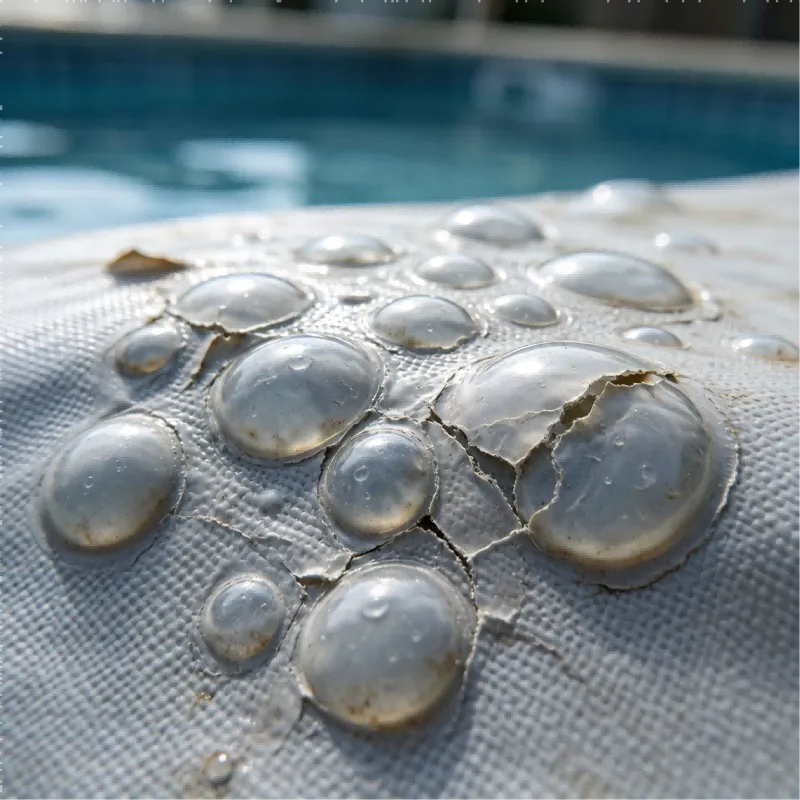
A liner that feels stiff or brittle when pressed, or shows surface cracking near the waterline, has undergone irreversible material breakdown.
Leaks.
Normal evaporation runs about ¼ inch per day in summer. To test for a liner leak, place a bucket of pool water on the first step, mark both the pool and bucket water levels, and check after 24 hours.If the pool has lost significantly more water than the bucket, you have a leak.
Patch or replace?
Patch when: the damage is a single puncture under 2 inches, the liner is under 5 years old, and the material is otherwise in good condition. Replace when: the liner is over 7 years old, there are multiple leaks, or you see widespread brittleness or blistering. A practical rule-if you've already patched the liner once and it's leaking again somewhere else, replace it. You're patching symptoms, not solving the underlying problem.
What Liner Replacement Actually Costs in 2026
|
Cost Component |
Typical Range |
|
Liner material (medium pool, 25 mil) |
$1,200 – $1,700 |
|
Labor (standard installation) |
$800 – $2,200 |
|
Water refill |
$150 – $400 |
|
Chemical startup |
$150 – $300 |
|
Old liner disposal (if billed separately) |
$75 – $200 |
|
Total (medium pool, standard shape) |
$3,500 – $6,500 |
Cost figures above are compiled from contractor quotes across multiple U.S. markets (2024–2025) and should be used as planning benchmarks. Your actual costs will vary based on pool shape, regional labor rates, and installer.Small pools typically run $2,500–$4,500 all-in. Large or freeform pools can reach $9,000–$12,000. Labor varies significantly by region-Northeast and West Coast rates run 30–50% higher than the Southeast and Midwest.
To get the best price: collect at least three fully itemized quotes, ask specifically what's included (water, chemicals, disposal), and schedule in fall or early winter when contractors are less backlogged and more price-competitive.
How to Get More Years Out of Your Liner

Test water weekly.
pH is the most important parameter-keep it between 7.2 and 7.6. Calcium hardness is the most commonly neglected: low calcium makes water "hungry," and it compensates by pulling minerals from your liner material.
Cover the pool consistently.
Not just in winter-any time the pool isn't in active use. A liner that's covered most of the time ages substantially slower than one that sits in full sun all day.
Protect against physical damage.
Use ladder foot pads. Choose soft-edge pool toys. If you have large dogs, install a ramp or gradual exit to minimize wall-clawing. Skim debris regularly so nothing sharp settles on the pool floor.
Winterize correctly.
In cold climates: don't drop the water level too low, circulate chemicals fully before closing, use a properly fitted winter cover, and blow out plumbing lines. Skip any one of them, and you risk opening your pool in spring to find a liner that's already failed.
Fix small problems immediately.
A pinhole that gets patched the week you notice it stays a pinhole. Left alone, water movement enlarges it. Underwater patch kits cost $15–$30 and handle minor repairs without draining the pool.
Most pool liners hold up for 5–10 years - but how close yours gets to that upper limit comes down to three things: water chemistry, sun exposure, and how well it was installed. If you're seeing recurring leaks, surface cracking, or large blistered sections, the liner is telling you it's done. On thickness, 25 mil covers most residential pools comfortably; step up to 30 mil if you have kids or dogs regularly in the water - the extra upfront cost pays for itself in liner years. For reference, full replacement in the U.S. market currently runs $3,500–$6,500 all-in, so building that into your procurement planning early makes a difference.

📩 Looking for a durable, customizable PVC pool liner? HLB offers factory-direct pricing across multiple thickness grades with full OEM support - send us an inquiry for a current quote.
FAQ
Q: What voids a pool liner warranty?
A: Most warranties are voided by chemical damage from sustained pH below 7.0 or above 7.8, use of copper-based algaecides, installation by an uncertified contractor, and freeze damage resulting from improper winterization. Exclusions vary significantly by manufacturer-read the exclusions section before purchasing, and ask for the full proration schedule so you know what you'd actually receive at years 5, 7, and 10.
Q:How do I know when my liner needs replacing?
A: Key signals: multiple leaks in different locations, widespread brittleness or surface cracking, large-area blistering, and significant material degradation beyond surface fading. A single small leak in a young liner is patchable; recurring leaks in a 7+ year liner typically mean the material has reached end of life.
Q:How much does liner replacement cost in 2025?
A: $3,500–$6,500 all-in for a standard medium pool, including liner, labor, water, and chemicals. Small pools run $2,500–$4,500. Get itemized quotes and schedule off-season for better pricing.
Q:Which liner thickness should I choose?
A: 25 mil for standard family use. 30 mil if you have large dogs, active children, or plan to stay in the home long-term. 20 mil if budget is the primary constraint and use is light. If choosing embossed, size up one grade to account for the peak-measurement difference.
Q: Can I patch instead of replacing?
A: Yes, for a single puncture under 2 inches in a liner under 5–6 years old with no other signs of degradation. Replace if the liner is over 7 years old, has multiple leaks, or shows widespread material breakdown-patching at that stage just moves the failure point.
Q: Does water chemistry affect liner lifespan?
A: Significantly. A liner in consistently well-balanced water will typically outlast the same liner in poorly managed water by several years-pool service professionals commonly estimate a 2–4 year difference, though results vary by climate, usage intensity, and liner quality. pH is the most impactful parameter-keep it between 7.2 and 7.6.
Q:Is embossed or non-embossed liner better?
A: Non-embossed liners are uniformly thick, so the mil rating reflects actual protection throughout. Embossed liners are measured at texture peaks and may be thinner in between-but they're softer underfoot and remain the market standard. If you go embossed, consider sizing up one thickness grade.
Q:Can I use a saltwater system with a vinyl liner pool?
A: Yes, but only with polymer (plastic) wall panels. Salt accelerates corrosion in steel or aluminum wall panels, which can eventually compromise the liner's fit and function. The liner itself handles saltwater well-check your pool's wall panel material before making the switch.
Q: What voids a pool liner warranty?
A: Most warranties are voided by chemical damage from sustained pH below 7.0 or above 7.8, use of copper-based algaecides, installation by an uncertified contractor, and freeze damage resulting from improper winterization. Exclusions vary significantly by manufacturer-read the exclusions section before purchasing, and ask for the full proration schedule so you know what you'd actually receive at years 5, 7, and 10.


