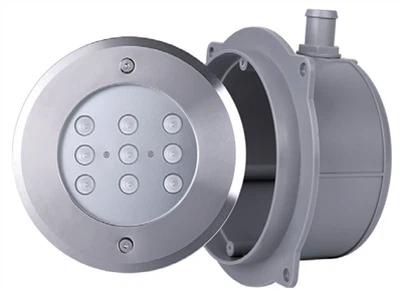
How many recessed pool lights do I need for my pool?
Leave a message

Determining the number of recessed pool lights you need for your pool is a crucial aspect of both safety and aesthetics. As a supplier of high - quality recessed pool lights, I've encountered numerous customers with questions about this very topic. In this blog, I'll guide you through the process of calculating the appropriate number of lights for your pool, taking into account various factors such as pool size, shape, and intended use.
Factors Affecting the Number of Recessed Pool Lights
Pool Size
The size of your pool is perhaps the most obvious factor in determining the number of lights. Larger pools will generally require more lights to ensure adequate illumination. For rectangular pools, a simple rule of thumb is to have one light for every 20 - 30 square feet of surface area. For example, if you have a rectangular pool that is 10 feet wide and 20 feet long (200 square feet), you would need approximately 7 - 10 lights.
However, it's important to note that this is just a rough estimate. Irregularly shaped pools may require a different approach. You need to divide the pool into smaller, more manageable sections and calculate the lighting needs for each section separately.
Pool Shape
As mentioned earlier, irregularly shaped pools present a unique challenge. Pools with curves, multiple levels, or unusual corners may need additional lights to eliminate dark spots. For instance, a kidney - shaped pool has areas that are more difficult to illuminate compared to a simple rectangular pool. In such cases, you may need to place lights strategically around the curves and in the corners to ensure even lighting.
In addition, pools with steps or a spa attached will also need extra lighting. Steps can be a safety hazard in the dark, so having lights installed along the edges of the steps is essential. A spa area often has a different depth and function than the main pool, so it should have its own set of lights for both safety and ambiance.
Intended Use
The way you plan to use your pool also affects the number of lights. If you only use your pool during the day, you may not need as many lights as someone who uses their pool at night for parties or swimming laps. For night - time swimming, you need sufficient lighting to see clearly underwater, especially if you have children or pets using the pool.
If you use your pool for parties, you may want to create a more festive atmosphere with colored lights. In this case, you can add additional lights that can change colors or create different lighting effects. For a lap pool, on the other hand, you need bright, even lighting to ensure a safe and comfortable swimming experience.
Recommended Lighting Layouts
Perimeter Lighting
One common lighting layout is perimeter lighting. This involves placing lights around the edge of the pool. Perimeter lighting not only provides general illumination but also creates a beautiful visual effect. You can install lights in the coping (the edge of the pool) or in the wall just below the waterline.


For a standard rectangular pool, you can space the lights evenly around the perimeter. A good rule of thumb is to place lights every 3 - 5 feet. This will ensure that there are no dark spots around the pool.
Underwater Lighting
Underwater lights are another popular option. They provide direct illumination of the water, making it easier to see swimmers and any objects in the pool. Underwater lights come in different shapes and sizes, and they can be installed at various depths.
For a deeper pool, you may want to install multiple rows of underwater lights. The top row can be installed just below the waterline to provide surface illumination, while the bottom row can be placed at a deeper level to light up the entire depth of the pool.
Step and Spa Lighting
As mentioned earlier, steps and spas require special lighting. For steps, you can use small, low - voltage lights that are installed along the edge of each step. These lights not only make the steps visible but also add a decorative touch.
A spa area should have its own lighting system. You can choose to install lights around the perimeter of the spa or use underwater lights to create a relaxing atmosphere. If the spa has a waterfall or jets, you can also add lights to highlight these features.
Calculating the Number of Lights
To calculate the number of recessed pool lights, you first need to measure the surface area of your pool. If it's a rectangular pool, simply multiply the length by the width. For irregularly shaped pools, you can use a pool measurement tool or consult a professional to get an accurate measurement.
Once you have the surface area, you can use the rule of thumb of one light for every 20 - 30 square feet. However, remember to adjust this number based on the factors mentioned above. If your pool has a complex shape or you plan to use it at night, you may need to increase the number of lights by 20 - 50%.
For example, if you have a 300 - square - foot rectangular pool and you plan to use it mainly at night, based on the 20 - 30 square feet per light rule, you would need 10 - 15 lights. But considering the night - time use, you may want to increase this number to 12 - 22 lights.
Other Pool Products to Consider
In addition to recessed pool lights, there are other pool products that can enhance your pool experience. Above Ground Pool Handrails are essential for safety, especially for children and the elderly. They provide a stable support when entering and exiting the pool.
Vinyl Pool Liners not only protect the pool structure but also add a decorative touch. They come in various colors and patterns, allowing you to customize the look of your pool.
Above Ground Pool Heater is a great addition if you want to extend your swimming season. It keeps the water at a comfortable temperature, so you can enjoy your pool even when the weather is a bit cooler.
Conclusion
Determining the number of recessed pool lights for your pool is a multi - faceted process that involves considering the pool size, shape, and intended use. By following the guidelines in this blog, you can calculate the appropriate number of lights to ensure a safe and enjoyable swimming experience.
As a recessed pool light supplier, I'm here to help you with all your pool lighting needs. Whether you have questions about the installation process, the different types of lights available, or need advice on the number of lights for your specific pool, I'm just a message away. Contact me to discuss your pool lighting requirements and let's work together to create the perfect lighting solution for your pool.
References
- "Pool Lighting Guide" by the Pool & Hot Tub Alliance
- "Swimming Pool Design and Construction" by John Wiley & Sons