How to Choose a Swimming Pool Cover: Types, Safety, Sizing & Savings
Leave a message
links marked are placeholders - point them to your product, category, and contact pages. Specs (savings figures, safety standards, lifespans) use realistic industry ranges; replace them with your own product data and local code requirements before publishing.
Most of the heat, water, and chemicals your pool loses don't go into swimming - they evaporate into the air. A pool cover is the single cheapest way to stop that, and the right one also keeps leaves out, cuts your cleaning time, and - with the proper type - can keep a child or pet from falling in. The wrong cover just wastes money or gives a false sense of safety. This guide breaks down the types of pool covers, the solid-versus-mesh decision, what a real safety rating means, how to measure a pool of any shape, and how long each type lasts.
What a Pool Cover Actually Does for You
Before comparing products, it helps to know what you're buying the cover for. Most pools benefit in four ways.
It stops evaporation.
Evaporation is the single biggest source of energy and water loss in a pool. A cover cuts it by roughly 90–95%, which means less water to top up and far less heat escaping overnight.
It saves heating and chemicals.
Because the cover traps heat and blocks UV, you reheat less and your chlorine lasts longer - covered pools commonly use 35–50% fewer chemicals. A solar cover goes further and actively warms the water.
It keeps the pool clean.
Leaves, dust, and debris stay out, so you skim less, run the filter less, and fight algae less.
It can save a life.
A certified safety cover supports weight and keeps children and pets out of the water. Not every cover does this - and knowing the difference is the most important call you'll make.
Types of Pool Covers
Pool covers fall into four main categories, and they solve different problems. Pick the type by your primary goal first, then refine from there.
Solar Covers (Solar Blankets)
A solar cover is a lightweight, bubble-textured blanket that floats on the water. It uses the sun to warm the pool - often raising the water 5–10°F - while drastically cutting evaporation. It's cheap and effective for heating and water retention, and it rolls on and off with a reel. What it is not is a safety cover: it sits on the water and supports no weight. Choose it when your main goal is a warmer pool and lower bills.https://www.hlbpoolsandspas.com/pool-cover/sliding-pool-cover.html
Winter / Debris Covers
These are off-season covers that protect the pool while it's closed. Solid tarp-style versions block all sunlight to prevent algae but collect rainwater, so they need a cover pump. Mesh versions let water drain through and are lighter to handle, though they allow some light and fine debris. Choose a winter cover when you simply need to seal the pool through the off-season, not for year-round safety. https://www.hlbpoolsandspas.com/pool-cover/polycarbonate-pc-slat-pool-cover.html
Safety Covers
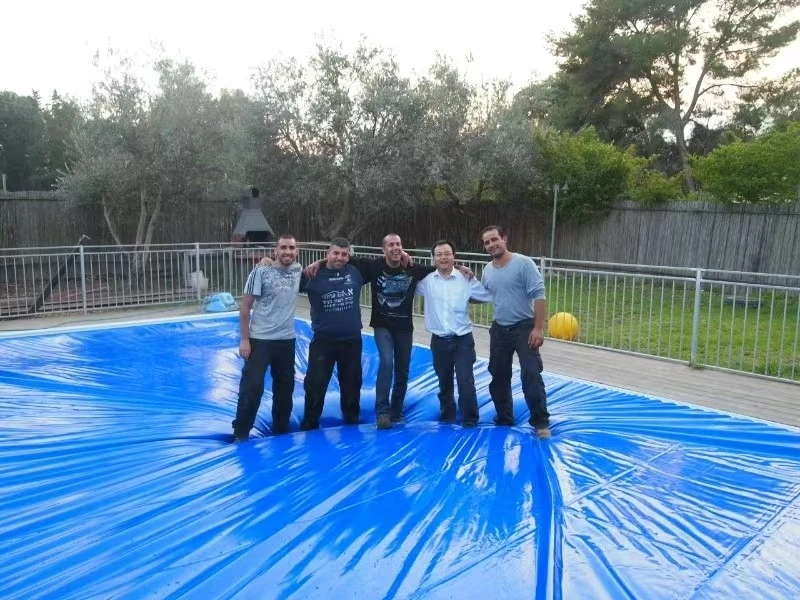
A safety cover anchors into the deck and is held taut by springs and straps, so it can support the weight of a child or pet - the standard to look for is ASTM F1346. They come in mesh (drains water, lighter, lets a little light through) and solid (blocks all light for the best algae control, but needs a cover pump or built-in drain panels). This is the best all-in-one choice for families: safety plus debris protection in one cover. (https://www.hlbpoolsandspas.com/pool-cover/pvc-safety-pool-cover.html)
Automatic / Motorized Covers
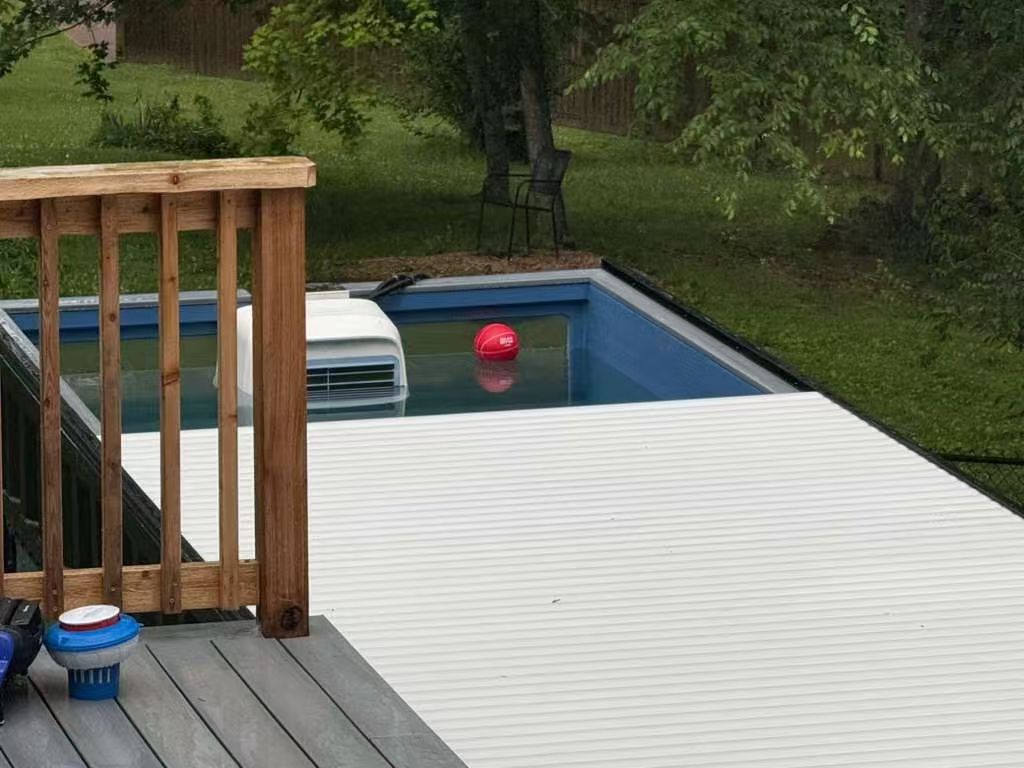
An automatic cover rides on tracks and opens or closes at the push of a button. It's the premium, do-everything option - it provides safety, heat retention, evaporation control, and debris exclusion with no manual handling. The trade-offs are cost and installation: auto covers need tracks, a housing, and professional fitting. Choose one when convenience and an all-in-one solution justify the price. (https://www.hlbpoolsandspas.com/pool-cover/automatic-sliding-or-folding-cover.html)
A quick rule: pick by your top priority. Heat → solar; safety → a certified safety cover; off-season only → winter cover; everything, hands-free → automatic.
Solid vs Mesh - the Choice That Trips People Up
Once you've settled on a safety or winter cover, you'll choose between mesh and solid. This is where most buyers hesitate, so here's the plain version.
Mesh lets rain and snowmelt drain straight through, so there's no standing water to pump off. It's lighter, easier to put on and take off, and usually cheaper. The trade-off is that fine debris and a little sunlight get through, which can leave sediment on the bottom and allow some algae over a long closure.
Solid blocks 100% of light, which is the best defense against algae, and keeps every bit of debris out. The cost is handling: water pools on top, so you need a cover pump, or you choose a solid cover with mesh drain panels. Solid covers are also heavier and pricier.
Choose mesh if you want the least maintenance and don't mind a quick vacuum at opening. Choose solid if algae prevention and the cleanest possible water at opening matter more than the extra handling. In heavily wooded yards with constant leaf drop, solid (or a fine mesh) saves the most cleanup.
Safety Ratings & Standards
If kids or pets are around the pool, this section matters more than any other. A genuine safety cover meets ASTM F1346, which means it's tested to hold a specified weight and to keep a person from slipping underneath. These covers anchor into the deck and are tensioned so the surface stays firm.
The critical thing to understand: solar blankets and most winter tarps are not safety covers. They float or simply lie over the pool and won't support weight - treating one as a safety barrier is dangerous. In many regions a certified safety cover is also tied to code or insurance requirements, and it can lower your premiums. If safety is on your list at all, buy a cover that's actually rated for it.
Size & Shape - Getting a Cover That Fits
A cover that doesn't fit leaks heat at the edges, sags, or won't anchor properly. Nail the fit before you buy.
Rectangular vs Freeform Pools
Rectangular pools are the easy case - standard sizes fit, and you mostly just need the right dimensions and overlap. Freeform, kidney, L-shaped, and Roman-end pools need a custom-fit cover cut to your exact outline. Forcing a stock cover onto a curved pool leaves gaps and weak anchor points.
How to Measure Your Pool
A few careful measurements prevent a bad fit:
1. Rectangular pools: measure length and width at the longest and widest points, edge to edge. Note that safety covers are ordered to the pool size - the manufacturer adds the deck overlap and anchor allowance.
2. Freeform / irregular pools: use the A-B measurement method - set a straight baseline along one side, then measure out to points around the pool's edge at regular intervals to map the curve. A template or CAD drawing works too.
3. Note the deck surface: concrete, pavers, wood, or grass changes which anchors you'll need.
4. Account for features: steps, raised walls, and diving boards affect the cover shape and anchor layout.
5. Confirm against the spec before ordering, and send your measurements for review if the pool is unusual.
Measure to the pool's edge, not the water line - and when in doubt on a curved pool, go custom rather than forcing a near-match.
Match the Cover to Your Climate
Your weather should steer the choice. In cold, snowy regions, prioritize a strong cover rated to handle snow load, and lean toward mesh so meltwater drains instead of pooling - or a solid cover with a reliable pump. In hot, high-evaporation climates, a solar cover pays for itself fastest by cutting water loss and heating costs. In heavily wooded yards, a solid or fine-mesh cover keeps constant leaf litter out and saves the most cleanup. In windy, exposed locations, secure anchoring matters most, so a properly tensioned, deck-anchored cover beats anything that just lies on top. A cover matched to your conditions lasts longer and works harder.
Lifespan & When to Replace
Covers wear out at very different rates, so set expectations by type:
- Solar covers: about 3–5 years - sun and chemicals break them down fastest.
- Mesh safety covers: roughly 10–15 years, often backed by a prorated warranty.
- Solid safety covers: about 8–12 years.
- Automatic cover fabric: around 5–7 years, with the mechanism lasting longer.
- Winter tarps: 1–3 seasons for budget versions.
Replace your cover when you see tears or worn seams, brittle or badly faded material, fraying mesh, or - on a safety cover - stretched springs and straps or a surface that no longer stays taut. A safety cover that's lost its tension has lost its safety, so don't wait on that one.
Choosing With Confidence
It comes down to three calls. Start from your top priority - heating points you to a solar cover, child and pet safety to a certified ASTM F1346 cover, and "everything, hands-free" to an automatic cover. Then pick solid or mesh based on how much you value total algae control versus low-maintenance handling. Finally, measure to your pool's shape and go custom for anything that isn't a clean rectangle. Get those right and your pool stays warmer, cleaner, cheaper, and safer all season.
Need a cover cut to your exact pool shape and size - or wholesale and OEM volume? [Get a custom-fit quote →]() or [talk to our team]() about the right cover for your pool.
Frequently Asked Questions
Do pool covers really save money?
Yes. Evaporation is a pool's biggest source of heat and water loss, and a cover cuts it by roughly 90–95%. That means less reheating, less water to replace, and commonly 35–50% lower chemical use.
Solid or mesh safety cover - which is better?
Mesh drains water, is lighter, and needs less maintenance, but lets a little light and fine debris through. Solid blocks all light for the best algae control and keeps everything out, but needs a cover pump and costs more. Choose mesh for easy handling, solid for the cleanest water at opening.
Is a solar cover a safety cover?
No. Solar blankets float on the water and support no weight. Only a cover rated to a safety standard like ASTM F1346, anchored to the deck, is a true safety barrier for children and pets.
How do I measure a freeform or irregular pool for a cover?
Use the A-B measurement method: set a straight baseline along one edge, then measure out to points around the pool at regular intervals to map the curve. A template or CAD drawing also works. Irregular pools almost always need a custom-fit cover. [Request a custom-fit cover →]()
How long does a pool cover last?
It depends on type: solar covers about 3–5 years, mesh safety covers 10–15 years, solid safety covers 8–12 years, automatic cover fabric 5–7 years, and budget winter tarps 1–3 seasons.
Do I need a cover pump?
If you choose a solid cover, yes - water pools on top and has to be removed, unless the cover has built-in mesh drain panels. Mesh covers drain on their own and don't need a pump.
Can I get a custom cover for an odd-shaped pool?
Yes. Custom and OEM covers are cut to your exact outline, which is the right route for freeform, kidney, L-shaped, or Roman-end pools where stock sizes leave gaps.
Will a cover keep my pool warmer?
Every cover reduces overnight heat loss, and a solar cover actively warms the water - often by 5–10°F - by capturing sunlight while cutting evaporation.